
How Facial Massage Calms the Nervous System
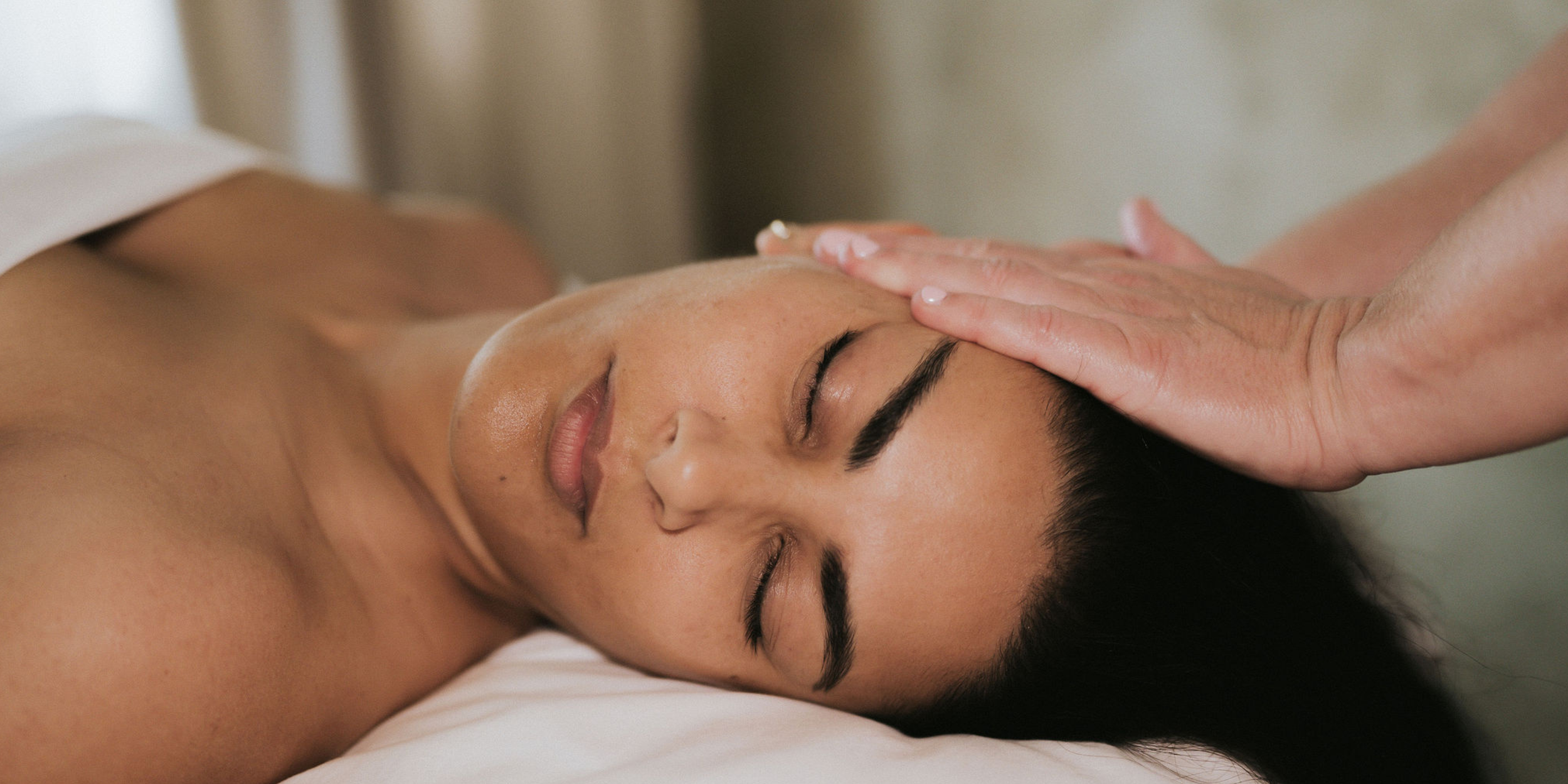
Most people think of relaxation as something that happens in the mind first, and the body follows. With the face, it works the other way round.
The face carries more nerve endings than almost any other part of the body. Two nerves do most of the work. The trigeminal nerve, which reads sensation across the whole face, and the vagus nerve, which passes close to the jaw and ears on its way through the neck. Both connect straight into the brainstem, the part of the nervous system that decides whether you are safe and settled, or braced and alert.
That is why touch to the face can change how you feel faster than almost anything else.
Why the face is different
Most muscles in the body respond to touch locally. Work on a shoulder, and the shoulder softens. The face is more connected than that. Slow, sustained pressure through the jaw, temples and scalp reaches the trigeminal and vagus nerves directly, and signals the brainstem to shift out of a stress state.
This is the same shift that happens with slow breathing or a long exhale. Facial massage reaches it through touch instead.
What stress does to the face first
The face is often where stress shows up before anywhere else. A clenched jaw. A tight brow. Shallow breath held in the throat and neck. Most people do not register this as stress. They register it as a tired face, or a tight feeling they cannot place.
Over time, that bracing becomes the default. The nervous system stays slightly on alert even when nothing is wrong, and the face holds the pattern.
What changes during a session
Slow, hands-on work through the jaw, temples and neck sends a different signal. Heart rate settles. Breathing slows on its own, without being told to. The bracing in the jaw and brow releases because the nervous system has been told, through touch, that it can stand down.
This is not the same as feeling drowsy or zoned out. Most clients describe it as suddenly noticing how much they had been holding, only once it lets go.
Why this is different from general relaxation
Meditation and rest work on the nervous system through the mind. Facial massage works on it through the body directly, using the same nerve pathways that read stress in the first place. Neither replaces the other. Hands-on work reaches a layer that thinking your way to calm cannot always get to.
What clients notice
A jaw that unclenches without being told to.
A breath that slows without trying.
A face that looks less braced, not just more relaxed.
A calm that lasts past the session, sometimes for days.
If you carry stress in your face without realising it, this is the work that reaches it directly. Appointments are available with Rachel, Kym, Danielle, Phoebe, Fiona and Nikki at faceupstudio.nz.